Showing posts with label Morocco. Show all posts

Saturday, October 27, 2012

Shaped by the Past, part I

By Christian

Our family trunk
Not long ago, one evening after dinner, I was showing our friends Mike and Marylyn a beautiful wooden trunk from Alsace, dated 1776, that I'd inherited from my Mom. It had been in the family since… 1776! I also showed them some antique silver Berber jewelry from Morocco that I had just brought back to the USA. Then Mike asked me how my ancestors had gotten to Morocco in the first place. 

I’ll jump from 1210, where we find the first trace of a Petrus Meert in Belgium, to the 19th century. To make a long story short, our family, on my father’s side, originated from Belgium. After the Napoleonic wars, they settled in France. At least three of our ancestors fought with Napoleon. Their names are engraved in the Arch of Triumph in Paris, on the Champs Elysées: Général Jean François Aimé Dejean, and his son Général Pierre François Marie Auguste Dejean (whose son became the French Minister of War in 1870, when France lost Alsace-Lorraine to the Germans, first link to my Mom’s side of the family), and Baron Général de Chamorin killed at Campo Mayor, Portugal in 1811.

Arc de Triomphe, Paris
My great, great grandfather was already French and had opened the very famous Chocolaterie Meert in Lille It's still in business today, and still very famous, though sadly not in the family anymore, but still bearing the name. 

Emblem of the Meert's chocolaterie
The General

My great grandfather was a general in the French army, Albert Ambroise Antoine Meert. He came to Tangiers, Morocco, for his son’s wedding to my grandmother on February 19, 1917. The general, his wife, and their daughter got stuck in Morocco after the wedding because of the German submarines patrolling the Gibraltar Chanel. They were still there for the birth of my Dad in Tangiers, Dec. 20, 1917.

At the time, most European countries were fighting to annex as many colonies as possible. France fought against the Turks in Algeria. The Turks had occupied most of the Mediterranean basin for centuries, including Palestine and Israel. France's main goal was to stop piracy in the Mediterranean, to free Christian slaves/prisoners, and all Christians who had been forcibly converted to Islam, the Janissaries. Then the French moved on to Tunisia, in the East, to Morocco, in the west, and to the Sub-Saharan countries of Africa to the South.
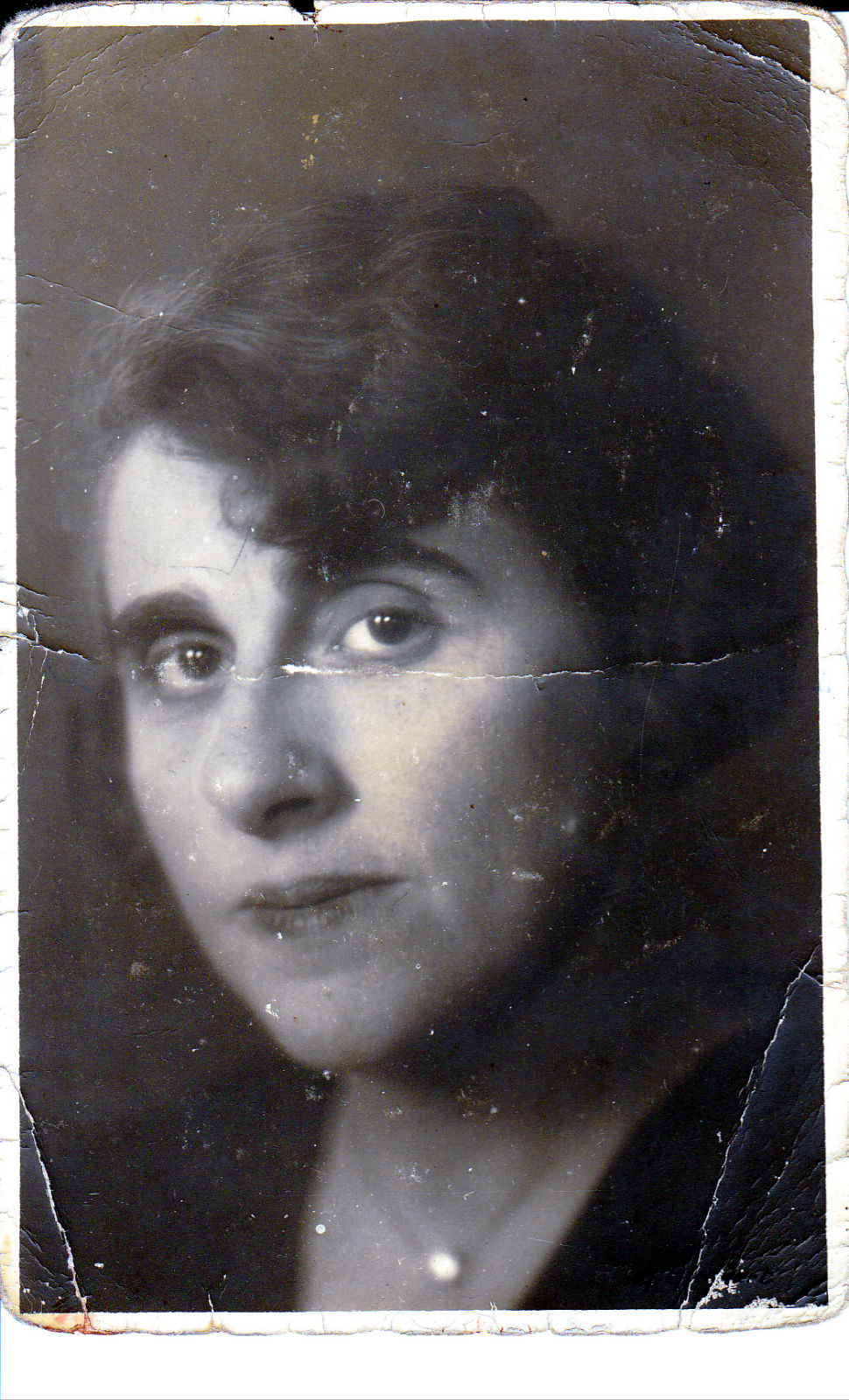
Hélène
When I was a child, we kept the general’s uniforms in a large steel case along with his swords and hats. He had been governor of Dunkirk and St Malo, and had an impressive series of medals; the most impressive one was a huge star of gold and vermeil that he had received from the Tsar in person in 1901. He had been a prisoner in Germany from 1870 to 1871 and had served in Algeria and other wars and colonial conquests.

By now, you know that my grandfather, Michel Henry Meert had married in Tangiers. My Grandmother, Hélène, whom I never knew because she died in 1945, was a French lady whose family originated from Valparaiso, Chile. They were in the import/export business. She was an artist, and moved to Tangiers with her family because of health problems. In Tangiers, she founded a live theater company. One day my grandfather happened to be an understudy for a sick actor, and the rest, as they say, is history. 
Her father was an inventor, and Freemason. 
He had invented the radial tire, but lost his invention to Michelin after a painful trial. 
He had also invented a transportation network of hot air balloons for Paris, a sort of aerial transport system where people could access and leave the balloons from rooftops. Sadly, it never took off.
Michel Henry
 
Michel Henry arrived in Morocco while serving in the military in 1912. Poor timing that made him stay there during and after WWI. 
The French Maréchal Lyautey was in charge of Morocco during WWI and kept all military personnel there to continue the development of the infrastructure: roads, railroads, electrification, telephone, and more. My grandfather worked for a Franco-Spanish railroad company that was building the railroad from Tangiers to Fez. As proof of originality, they named it the Tangiers-Fez Company. 
He was in charge of surveying construction and buying land from the local tribes.

From what I've been told, they had a pretty good life there, and lived on a grand scale. My grandparents had four children, starting with my dad, Pierre Ghislain, who was born in Tangiers, in 1917. I know they lived in Meknes, Morocco, for a while, to follow the railroad construction, Meknès being only 60 km from Fez. (More exciting stories to come...)


Monday, September 24, 2012

Behind Every Abortion There is a Dad (Healing in the Sacrament, part 3)

-->
 It’s not rocket science; behind every abortion there is a Dad.
My girlfriend and I had been dating on and off since we were 16. We left for college in two different cities in France. She was in Paris, and I was in Montpellier, about 500 miles south of Paris. I wouldn’t have called it a stable relationship. There was no marriage on the horizon, and we weren’t even really in love.
That summer of 1973 was a very difficult one for me; my Mom had come to Montpellier in February with terminal cancer, and she had passed away on May 17th. My girlfriend had joined me at her funeral in Alsace, my Mom’s birthplace. She had then gone back to Paris for her finals.
After my own finals in June, I went home to Morocco, to be with my Dad. I was 21. 
My family home in Meknès, Morocco
My Dad wasn’t doing too well, and I worked long hours supervising the harvest at an apple farm.
My girlfriend was vacationing in Spain with her family and one day she dropped by for a surprise visit, out of the blue, just for 24 hours.
We went to a nightclub with a group of friends, but we were not “together” at that time. Still, we ended up at my place for the night. She left in the morning, back to Spain and then Paris.
I was still working on the farm when she called from Paris to tell me that she was pregnant. She wouldn’t keep the baby. I suggested, not very strongly it is true, that we could get married, but for her it was out of the question. She needed money to go to England where abortion was legal. We had a few short phone conversations, mainly to talk about money and flights arrangements. We never mentioned the baby. One day she called and simply told me she was leaving for London. Then there was a last phone call, just to say, “It’s done.”
I felt completely numb. I was still grieving my mother’s death, and this only added to it.
College started again. I visited her in Paris in the fall, then again at the beginning of 1974. She told me everything about the abortion in a detached way. She didn’t seem to feel anything about it. Eventually, we got back together, but it didn’t last.
Awhile later, I learned by chance that she had gotten married at the end of the school year.

It was only years later that I realized how terribly it had affected me.
First, a very strong attachment had been created between the two of us through this abortion. We were “parents” and parents don’t have a baby without this strong attachment. It’s incredibly strong because it is nature’s way of keeping parents together; to make them fight together for their child for the rest of their lives. The baby may not have been born, but he was real and had created a psychological attachment between us.
Second, the abortion, on top of the fact that my girlfriend had left me without closure, had killed something inside me. I was lost. It seemed like all feelings had deserted me, as well as any desire for connection. I was avoiding anything that could start a lasting and serious relationship. I wanted the fun, but no strings attached. I was empty.
This was the state of mind I was in when I met Christine.
The sad thing is that this first abortion opened the way to another one.
There is not a day that I don’t think about these babies, not one day!

Christine and I participated in a Rachel’s Vineyard's retreat about ten years ago in Denver. I had to unearth all the pain I had buried deep within me, and all the pain I had inflicted to others. During the retreat I was granted an amazing gift. I had the vision of these two beautiful little guys, all dressed in white, playing peacefully together under a very large cedar, in a vast prairie. We have given them names, Philippe and Emmanuel. Christine has adopted Philippe. It’s a consolation but it doesn’t erase the pain.
http://janetpantryart.blogspot.com/2010/07/busy-busy-andmore-tea-vicar.html


Wednesday, September 19, 2012

Healing in the Sacrament, Part 2

-->
Before we go further, it is important to give a bit of our backgrounds.

Christian
I was born and raised as a French citizen in a Muslim country, Morocco. The end of the colonial era was surreal in the sixties and seventies. With my two brothers, as teenagers males, we had a lot of freedom; we also knew we had no future in our native country. We would graduate from high school in Morocco, then go to college in France. We were French citizens but didn’t know much about France. We didn’t think we could live there. 
My home town: Meknes, Morocco
We were a Catholic family. I used to help my mom prepare baskets for the elderly as a child. My faith was strong. I wanted to become a religious and my brothers would make fun of me and call me “ the little priest.” We were going to mass every Sunday until I turned 14 and started to skip it until gradually, I stopped altogether.
We lived our lives on a daily basis. We had seen and heard of atrocities, massacres of entire families by Moroccans. Phone lines were tapped; we couldn’t trust the people who were working in our house, even after many years. 
Three brothers and the nannies
I never opened up too much about who I was because who could I trust? I didn’t express my feelings; hey, it was a macho country! I didn’t look for deep conversations since our world could disappear in a moment. I didn’t even speak too loud to avoid eavesdroppers. We lived in a constant state of insecurity. We always had to be careful about what we was said on the phone, in our own house. Anybody could have been arrested just for laughing in a movie theater during the news if the King was on the screen. The police in the theater could think, and even swear, that you were making fun of the King. Of course everything could also be settled for a small amount of money.
We knew we would never take over my Dad’s land surveying company because it could be nationalized at any moment, for no reason. We could also have to pack and leave everything behind at any time without prior notice. It happened to many in Algeria, our neighbor in the East.
The end of such an era was full of mixed feelings. Besides all these insecurities, if you just lived in the moment, life was good and fun; we had a feeling of complete freedom. In this macho country, girls were there to please the men and we loved it. The real guys were those who had as many girls as possible!
Hunting and chasing!

Christine
My hometown, Le Creusot, had nothing to do with sunny Morocco! It was a gloomy workers town in South Burgundy, France. The Schneider family built the town in the 19th century around their big factory. They made cannons, locomotives and armor plates. They had also built churches, hospitals, schools, and owned about everything in town. Everybody was working for them! It wasn’t really a fun town. There wasn’t much to do. People had a strong accent that rolled the r’s, and that was it. Nothing to boast about.
Le Creusot's famous hammer
My childhood was what any outsider would have called “happy.” No major trauma besides my mother’s accident, when I was about 5. She was driving a scooter and ran into a huge moving truck. She landed on the other side of the truck, and was in a coma with a concussion for 3 days. I remember seeing my older sister cry, my Dad awfully worried, but I didn’t really understand what was going on.
Besides this event, it seems like there isn’t much to say. When you look at my childhood pictures, though, you can see that I didn’t smile very often. I had a crabby look most of the time. 
Yes, I'm the one on the right!
Truth be told, my two older brothers weren’t particularly kind and I had no one to defend me. I remember being tied to a tree most of an afternoon, for example. They would also call me names, tell me I was fat and had a big nose... so much for my self-esteem. I would complain to my Mom, but she didn’t want us to pity ourselves, so she would just send me away, saying that they were just “teasing” me. My Dad was completely absorbed in his job and didn’t have any time for us.
I was a very anxious child, probably absorbing my father’s chronic anxiety.
I was also very straightforward and always spoke my mind, which embarrassed my parents more than once!
We were also a practicing Catholic family, going to mass every Sunday. My faith was strong as a child. I was greatly inspired by the stories of the saints and missionaries. When I was six, I wanted to become a nun, a dancing nun actually (I wonder why no one took me seriously?) and I wanted my religious name to be “sister Daffodil,” because they were my favorite flowers (still are!). Then I turned 13 and the Church became liberal in France. That’s when I started to find mass boring.
I brought my insecurity into our relationship, as I had never felt understood. I craved attention, love and protection…  (to be continued)